- Welcome to ElectricalAnswerMan!.
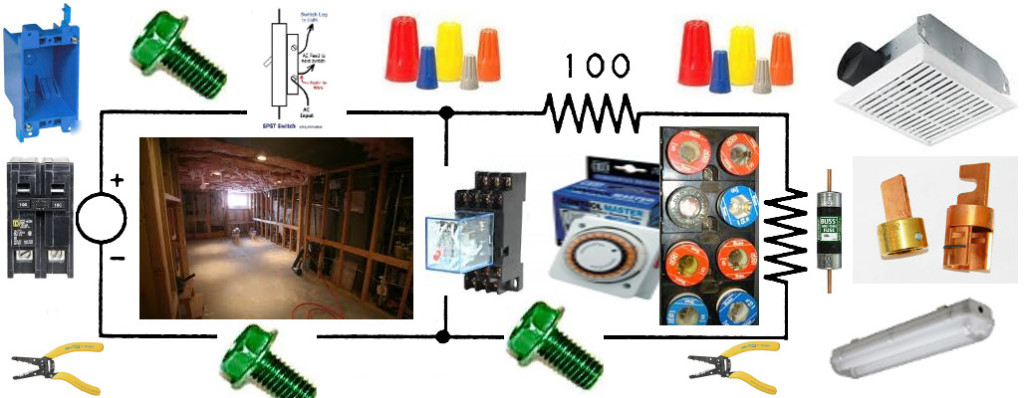
Branch circuits
Questions about number of devices, kinds of devices allowed, ampacities, etc. in Additions, garages, conversions. Home branch circuit wiring is a crucial part of any electrical system, designed to supply power to various devices and outlets within a residence. Each branch circuit consists of a loop of wire that runs from the circuit breaker panel to the lights, receptacles, and appliances, and back again. These circuits are classified into different types based on their function: General Purpose Branch Circuits: These circuits supply power to light fixtures and outlets. Modern general circuits use 12-gauge wire and are rated for a maximum of 20 amperes (amps). They are typically 120 volts and are used for standard outlets and lighting fixtures. Appliance Branch Circuits: These circuits supply power to fixed electrical devices such as refrigerators, washing machines, and dishwashers. They are also rated at 120 volts but can have higher-capacity 20-amp breakers and 12-AWG wiring. These circuits are usually installed in kitchens, bathrooms, and laundry areas. Individual Branch Circuits: These circuits supply power to a specific device, usually a permanent appliance like a clothes dryer or an electric stove. They are often 240 volts and require larger wires to handle the higher amperage. Multiwire Branch Circuits (MWBCs): This is a unique wiring technique where a single cable serves two circuits, each with a voltage between them and sharing a common neutral wire. This method reduces clutter and simplifies the panel's wiring. However, it requires careful maintenance and should be managed by a certified electrician.

Moved Topic
Locked Topic
Sticky Topic
Topic you are watching